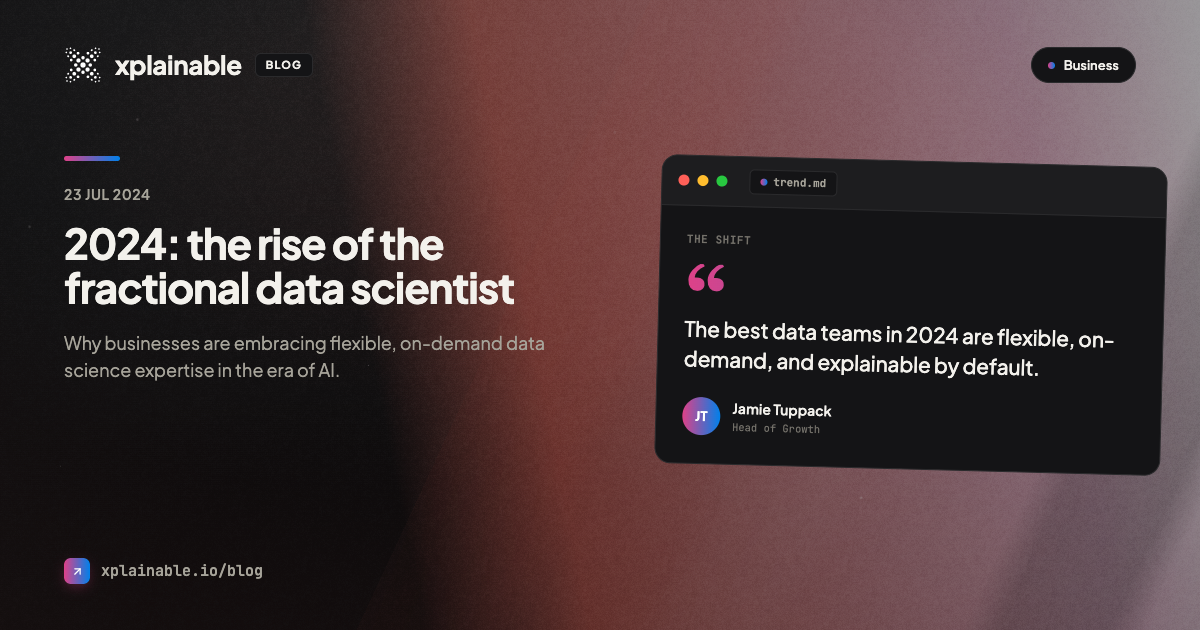
2024 The Rise of the Fractional Data Scientist
Why businesses are embracing flexible data science expertise in the new era of AI adoption

In today's data-driven business landscape, organisations are increasingly recognising the need for advanced data capabilities. However, many struggle to get started or augment their existing data teams, rendering them unable to effectively utilise their data. This article explores the concept of fractional data capabilities and how they can be leveraged to address these challenges.
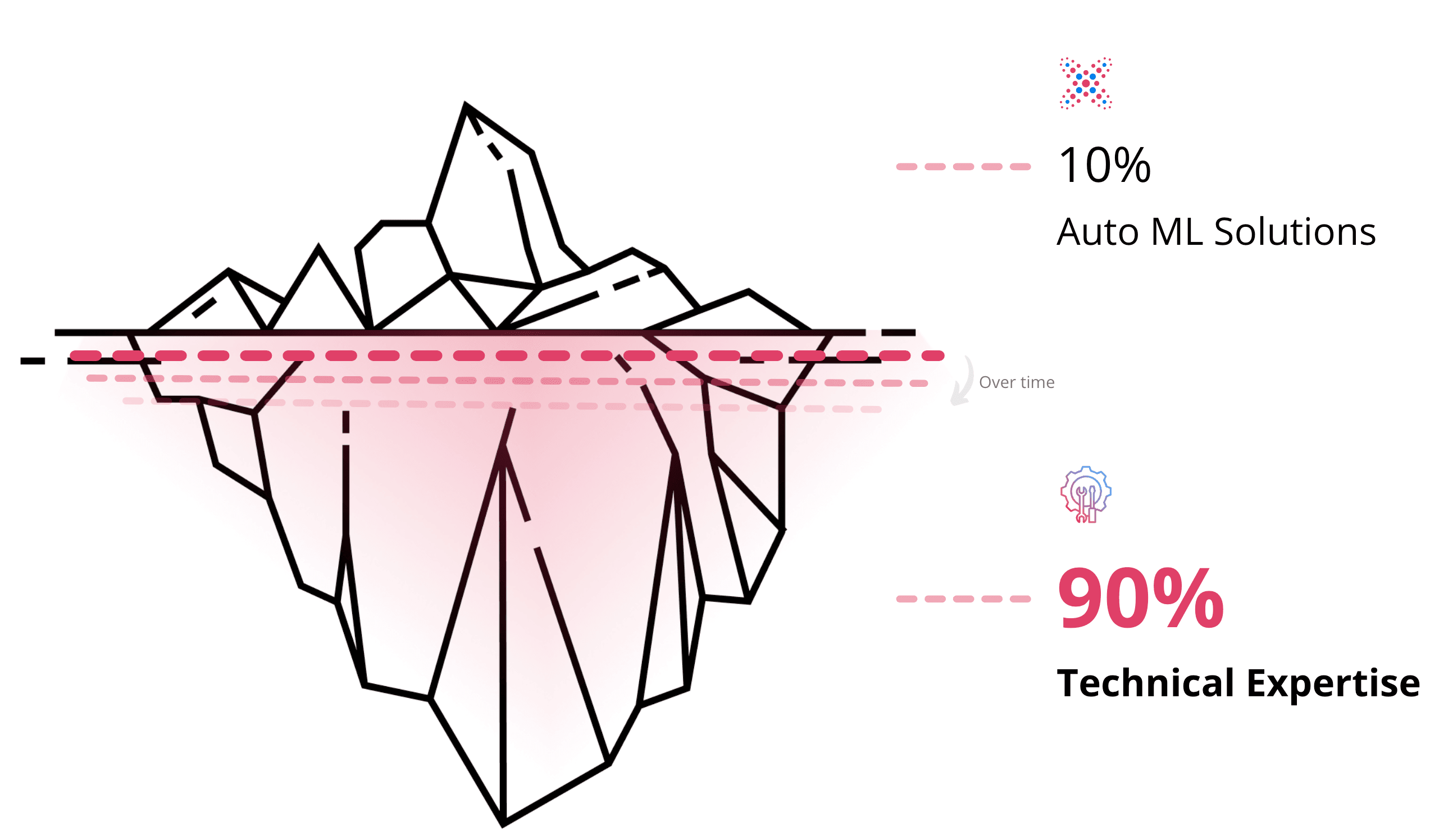
The Data Iceberg Analogy
Think of your data as an iceberg. AutoML solutions, while powerful, only address the top 10 to 20% of problems – merely the tip of the iceberg. They handle straightforward tasks like basic predictions and classifications efficiently, but fall short when faced with more complex and nuanced problems. The remaining 80% of data challenges lie beneath the surface, too intricate for a “one size fits all” solution. “Everything is an edge case” is a saying that will resonate with anyone involved in data science. This is particularly true when dealing with challenging, unique problems that demand tailored solutions, beyond the capabilities of current AutoML.
The Cautionary Tale of AutoML Solutions
It’s tempting to believe the promises of AutoML solutions that claim to be completely hands-off and capable of solving all of your data challenges. However, in practice, this is hardly the reality. While AutoML can indeed speed up the process and handle routine tasks, the initial setup and ongoing maintenance require significant upfront hours and expertise. For instance, understanding the preprocessing required for each dataset is crucial for ensuring accurate and actionable predictions that cannot be overlooked. Without proper oversight and customisation, these solutions are often unable to deal with the complexities of real-world data, effectively losing any of the benefits provided by data science.
The Role of the Fractional Data Scientist
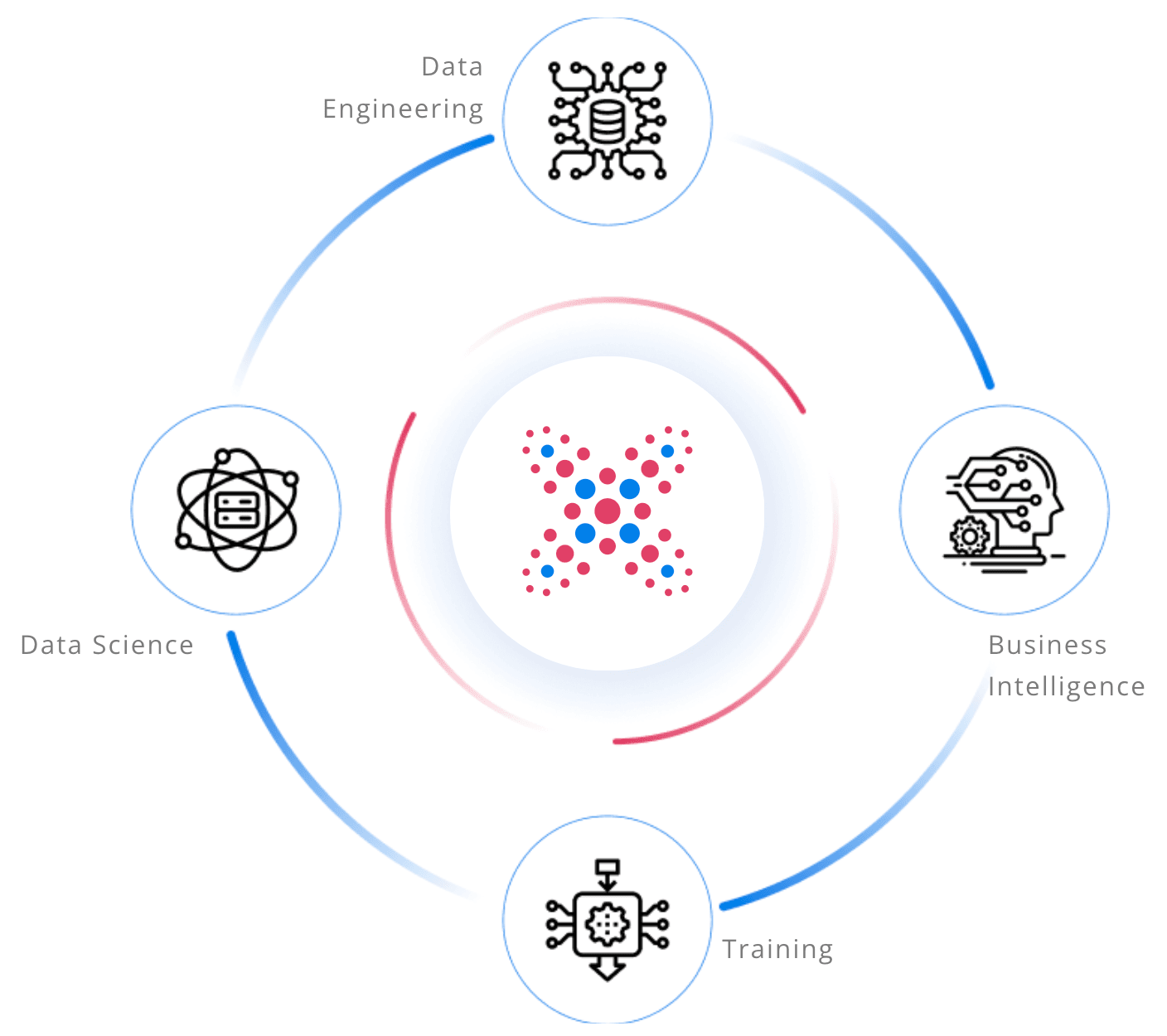
As businesses progress along the data maturity curve, the role of the fractional data scientist becomes increasingly crucial. These professionals provide a flexible, scalable talent pool that can be integrated into your organisation as needed. They bring diverse expertise from various domains, including business intelligence, data engineering, and data science. This flexibility allows businesses to scale their data capabilities horizontally and draw on a broad range of experiences and insights.
Fractional data scientists are particularly adept at navigating the complex, often messy data that companies have been collecting for the past decade. They excel in integrating and processing big data, making it usable for advanced analytics and machine learning. By leveraging tools that streamline data engineering tasks, these experts can focus on extracting valuable insights and driving strategic decisions.
With a fractional data scientist, you can scale your business by leveraging specialised expertise for specific tasks, without the need to hire full-time employees for each role. This approach allows you to access the skills you need across various aspects of your business, for the convience of a single hire.
Benefits of Fractional Data Science
Fractional data scientists offer several advantages:
- Scalability: Fractional data scientists provide scalable expertise, allowing you to adapt to project demands without committing to full-time hires.
- Diverse Expertise: Access to a broad talent pool ensures that you benefit from varied experiences and insights, enhancing your ability to tackle diverse data challenges.
- Flexibility: You can bring in specialised skills as needed, ensuring that your team has the right capabilities at the right time.
- Efficiency: By leveraging fractional capabilities, you can optimise your data processes, ensuring that you get the most value from your data investments.
- Deeper Domain Understanding: Fractional capabilities enable you to delve further into domain-specific problems, leveraging expert insights to address unique challenges and uncover hidden opportunities within your data.
Growth of Fractional Data Science
The trend towards fractional data science capabilities has seen significant growth, stemming from a “talent deficit and the amount of data doubling at a variable speed” (World Data Science). According to a McKinsey prediction, the U.S. alone will be short of 250,000 data scientists in 2024, expected to worsen with the increase in demand for AI related skills and expertise. For instance, the demand for natural language processing skills increased from 5% in 2023 to 19% in 2024 (365 Data Science). Additionally, the global market for big data analytics is projected to grow from $104.19 billion in 2023 to $118.55 billion in 2024, reflecting a compound annual growth rate of 13.8% (365 Data Science) With the deficit in experienced data scientists, finding a single employee to address a specific aspect of your business’s growth is challenging, let alone hiring multiple employees to cover all your data needs.
Implementing Fractional Data Capabilities
To effectively leverage fractional data capabilities:
- Assess your current data maturity and identify gaps
- Define clear objectives for your data initiatives
- Engage with fractional data professionals or services that align with your needs
- Ensure good communication and integration with your existing teams
- Start with smaller projects to build trust and understanding of the process
Conclusion
As businesses continue to navigate the complexities of the age of data, leveraging fractional data capabilities is becoming an increasingly adopted solution. It addresses the limitations of AutoML solutions and ensures that your organisation can fully capitalise on its data. The next time someone in the sales department touts an AutoML solution as a one-size-fits-all answer, remember the data iceberg analogy. Be prepared to invest the necessary effort upfront and consider how fractional data capabilities can enhance your data strategy.
By embracing a fractional approach, you position your business to unlock the full potential of its data, driving innovation and achieving sustainable growth.